We have compiled a list of manufacturers, distributors, product information, reference prices, and rankings for Legal drainage treatment facility.
ipros is IPROS GMS ・ IPROS One of the largest technical database sites in Japan that collects information on.

Legal drainage treatment facility - List of Manufacturers, Suppliers, Companies and Products | IPROS GMS

Legal drainage treatment facility Product List

1~3 item / All 3 items

Displayed results

Case Study of Membrane Introduction in Liquid: Wastewater Treatment Equipment for Cosmetics

Doubling the processing capacity without expanding the water tank! Introduction of a case study on the stable water quality of treated water with the introduction of a liquid membrane.

This is an introduction to a case where a liquid membrane was introduced into wastewater treatment equipment for cosmetics. Due to changes in products and an increase in production volume, it became necessary to enhance the wastewater treatment facilities. The membrane separation activated sludge method, which allows for the modification and utilization of existing treatment equipment, was adopted. By maximizing the use of the liquid membrane and existing facilities, it became possible to treat twice the amount of water without the need for additional tanks. Additionally, with the use of a guarantee system, daily support from Kubota Membrane Corporation ensures stable performance. [Case Study] ■ Location: Hyogo Prefecture ■ Type of wastewater: Cosmetic wastewater ■ Treated water volume: 60m3/day ■ Operation: From November 2000 and from January 2006 *For more details, please refer to the PDF document or feel free to contact us.

  • Water treatment equipment
  • Legal drainage treatment facility

Added to bookmarks

Bookmarks list

Bookmark has been removed

Bookmarks list

You can't add any more bookmarks

By registering as a member, you can increase the number of bookmarks you can save and organize them with labels.

Free membership registration

Case Study of Membrane Introduction in Liquid: Wastewater Treatment Equipment for Processing Animal and Vegetable Oils and Fats

High-concentration wastewater containing grease is transformed into clear treated water! Introduction of a case using liquid membranes.

This is an introduction to a case where a liquid membrane was introduced into the wastewater treatment facility for animal and vegetable oil processing. During the expansion of the factory, consideration was given to the discharge river, resulting in the modification of the wastewater treatment facility to a membrane separation activated sludge method. Although it involves high-concentration wastewater containing oil and fat, by combining floating separation equipment with the membrane separation activated sludge method using liquid membranes, clear treated water is consistently obtained. This treated water is effectively utilized for snow melting in winter and for irrigation of young plants in summer. Excess sludge is dewatered and then incinerated. The waste heat generated during incineration is used for heating water, which is effectively utilized for cleaning water within the factory. [Case Study] - Location: Niigata Prefecture - Type of wastewater: Animal fat processing wastewater - Treated water volume: - 95m³/day - +5m³/day (dewatering filtrate) - Operation: Since June 2009 *For more details, please refer to the PDF document or feel free to contact us.*

  • Water treatment equipment
  • Legal drainage treatment facility

Added to bookmarks

Bookmarks list

Bookmark has been removed

Bookmarks list

You can't add any more bookmarks

By registering as a member, you can increase the number of bookmarks you can save and organize them with labels.

Free membership registration

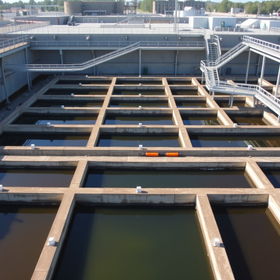
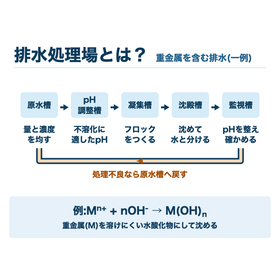
What is a wastewater treatment plant? Arrangement and flow of equipment [Basic Knowledge]

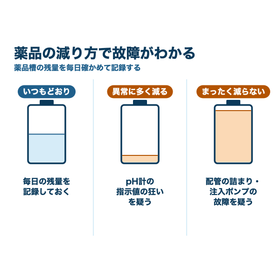
From the raw water tank to the reaction tank, sedimentation tank, and monitoring tank. This explains the order of the equipment lined up in the factory's wastewater treatment facility and the inspection points that should be checked daily at each stage.

A wastewater treatment plant is a collection of facilities within a factory or business that processes wastewater to meet the quality standards for discharge. In facilities that discharge into the sewer system, it is also referred to as a pollution control facility. The arrangement of the equipment varies depending on the nature of the wastewater, but a tank for collecting wastewater at the entrance and a tank for checking treated water at the exit are commonly included as basic components. Below, we will examine the process from the entrance to the exit. ■ Does the raw water tank reduce pollution? The concentration and volume of wastewater vary depending on the production time. Even if the wastewater is mixed and equalized in the raw water tank (equalization tank), the total amount of pollution does not decrease. However, the peaks in concentration are smoothed out, which stabilizes the subsequent treatment and makes operation easier. It is important to note that if highly concentrated waste liquid is discharged all at once, there is a risk of exceeding the standards even after equalization, so it is collected for separate disposal or stored in a dedicated tank for gradual treatment. ■ What is the guideline for storage time? For continuous treatment, some municipalities recommend a storage time of more than two hours of maximum wastewater volume or a retention time of more than two hours. It is important to check that these guidelines may vary by region and can be revised. Please feel free to consult us first.

  • 118_main.png
  • 118_sub.png
  • Wastewater treatment equipment, technology and maintenance
  • Wastewater/wastewater treatment equipment
  • Aeration equipment
  • Legal drainage treatment facility

Added to bookmarks

Bookmarks list

Bookmark has been removed

Bookmarks list

You can't add any more bookmarks

By registering as a member, you can increase the number of bookmarks you can save and organize them with labels.

Free membership registration